
Framing the next chapter in Swiggy's journey as a responsible corporate citizen, co-founder and chief executive officer (CEO) Sriharsha Majety unveiled the company's eagerly awaited public listing. Majety, who has largely shunned the spotlight, shared reflections on his entrepreneurial path and the strategic pivots he and his co-founders navigated in building Swiggy. "We started with code aggregation, then pivoted to logistics, and that became Swiggy.

The July-September quarter (Q2) results for 2024-25 (FY25) from the largest listed consumer electrical solutions companies, Havells India and Polycab India, followed similar trends, demonstrating robust revenue growth while falling short of profitability expectations. Both companies witnessed overall growth in the 16-30 per cent range, but margins declined by 130-290 basis points (bps) year-on-year (Y-o-Y). Although brokerages are bullish on long-term prospects and have raised revenue projections, earnings forecasts have been revised downward due to margin pressures.

'We are not asking for incentives, but at least taxation can be aligned such that the rupee tax on consumers remains the same.'

In the first quarter (Q1) of the ongoing financial year ending June 30, Westlife Foodworld, which operates McDonald's outlets in the South and West, reported an 88 per cent drop in net profit. While net sales remained flat, its same-store sales growth (SSSG) fell by 6.7 per cent, impacted by "subdued in-store business, although the off-premise segment saw positive same-store sales", the company said.
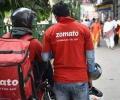
The filing of Swiggy's DRHP has led to direct comparisons with Zomato, which is a direct competitor in food delivery and the fast-growing quick-commerce segment where Blinkit (owned by Zomato) faces off against Instamart (and Zepto). In Q-commerce, Flipkart, Amazon, Reliance and Big Basket are all entering the space. All of them have deep pockets, hence competitive intensity will rise going forward.

Global capability centres (GCCs) are increasingly looking to tap into revenue opportunities from the Indian market, which is already a critical talent hub. While capturing the potential of the Indian market has been in the works over the past few years, it's only of late that companies are gaining momentum. India is home to more than 1,580 GCCs, with a total market size of $46 billion and growing at a compound annual growth rate (CAGR) of 11.4 per cent, according to a Nasscom-Zinnov report.

Fresh meat and seafood delivery unicorn Licious is intensifying its talent acquisition endeavours as it pursues profitability and readies for an initial public offering (IPO) within the next 24 months. Delightful Gourmet, Licious' parent company, has named 39-year-old Karishma Gupta as its new chief financial officer (CFO). Her appointment aligns with Licious' drive for profitable growth through an omnichannel strategy.

The stock of United Spirits, the country's largest liquor company by market capitalisation (mcap), has gained 11 per cent over the past week on double-digit growth guidance, rising premiumisation trend, operationally in-line performance in the March (Q4FY24) quarter and a rally in consumer stocks. The revenue growth of the company came in at 7 per cent year-on-year (Y-o-Y) mirroring the growth of the prestige and above (P&A) segment. This segment comprising premium brands accounts for 88 per cent of the revenues.

Infosys, like many of its peers, has been ramping local hiring in key markets like the US, the UK and Australia to tackle increasing scrutiny around work visas by various governments.
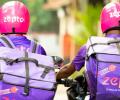
'Domestic investors are opening up to the idea of high-growth Internet companies as a pool of value creation.' 'They like the execution that they see with Zepto, and for us, that is the most important factor.'

Tata Motors owned Jaguar Land Rover will start producing its Range Rover and Range Rover Sport in India, marking a first for the iconic models in their 54-year long history, to be rolled out from a country outside of the UK. Till now the two models were only produced in Jaguar Land Rover's Solihull plant in the UK and then exported to around 121 markets globally, including India.

There could be near-term margin pressures for lifestyle accessories major Titan Company. Even as the company maintains its growth outlook over the medium term, it has revised its margin guidance for the jewellery segment downwards. The company has adjusted its medium-term margin guidance to 12 per cent from the previous range of 12-13 per cent.

'Our approach has been to work with consumers and help them drink better, not more.'

Marico's January-March quarter (Q4) results were slightly better than consensus. Revenue was up by 1.7 per cent year-on-year (Y-o-Y) to Rs 2,280 crore. Ebitda grew by 12.5 per cent Y-o-Y to Rs 440 crore. Adjusted PAT was up 10.3 per cent Y-o-Y to Rs 320 crore.

'We are seeing signs of improvement in rural overall in terms of demand, but I would still keep my fingers crossed.'

Electrical Consumer Durable (ECD) companies like Havells India have seen strong Q4FY24 sales and continuing seasonal demand across fans, air coolers, and room air conditioners (RAC) in addition to business-to-business sales of cables, switchgear, and professional lighting, among others. Havells India's Q4FY24 revenue rose 12 per cent year-on-year (Y-o-Y) to Rs 5,400 crore, in-line with consensus. Strong summer demand led to robust volume growth in fans and RAC and volume growth in cable and wires (C&W) due to infrastructure spending and real estate activity.

On a surprise visit to Beijing amid speculation that he may unveil Tesla's autonomous driving technology in the burgeoning electric vehicle (EV) market in China, billionaire Elon Musk on Sunday met Chinese Premier Li Qiang and discussed future expansion plans for his automobile.

Jack van Strien started his career in Philips Consumer Lifestyle in 1990.

Arjun Mohan, CEO of India operations of Think and Learn, which owns Byju's brand, has resigned from the beleaguered firm, which on Monday also announced a business rejig consolidating its operations into three verticals. Mohan had joined Byju's in July last year as the CEO for international business after quitting rival UpGrad in February as CEO. Later, he was given charge of India operations in September after Byju's then CEO Mrinal Mohit resigned. After taking over the charge, Mohan undertook restructuring of the organisation which led to layoffs of around 4,000 employees at Byju's.

World's largest software company Microsoft today announced it would provide a suite of software at three dollars (a little over Rs 120) to government funded computer education programmes in the country.

Smart devices maker Samsung continued to lead the smartphone market in the country for the fourth consecutive quarter in July-September with a 17.2 per cent market share, market research firm Counterpoint said on Wednesday. Shipments of iPhone maker Apple crossed 2.5 million units in the reported quarter thereby registering an all-time high in a quarter, according to the Counterpoint's Monthly India Smartphone Tracker report. "Samsung maintained its leading position for the fourth consecutive quarter with a 17.2 per cent share driven by the success of its A and M series.

Tata Communications on Wednesday announced that it would acquire NYSE-listed Kaleyra, a global omnichannel integrated communication services provider with a set of proprietary platforms offering targeted personalisation through messaging, video, push notification, e-mails and voice-based services, and chatbots. The acquisition is an all cash deal. Tata Communications has agreed to acquire Kaleyra at a price per share of $7.25, for a total consideration to Kaleyra shareholders of approximately $100 million, besides the assumption of all outstanding debt.

The FMCG sector is generally considered to be a safe haven during difficult times as people never stop buying soap and toothpaste. However, weak rural and semi-urban demand has been a factor since the lockdowns of 2020-21 while rising inflation has also impacted margins. While the FMCG majors have survived on the basis of price hikes and good management practices, they have seen growth slowdowns and experienced margins being squeezed as raw materials and transport costs rose. The FMCG sector witnessed positive volume growth in the fourth quarter of the 2022-23 financial year (Q4FY23) after five consecutive quarters of decline, and the rebound in demand was led by urban markets.

With a gradual rise in temperature and the start of heatwave, FMCG and dairy firms selling cola-based fizz drinks, juices, mineral water, ice creams and milk-based beverages expect a spike in sales and have ramped up their production and stocks to meet the anticipated consumer demand. The makers are launching new products keeping in mind the evolving consumer preferences and also investing substantially on promotions and expansion of the channels this season, company executives of beverage and ice cream makers said. Beverages major PepsiCo said summer months are naturally the most favourable season for its category and it is "optimistic" that its portfolio of brands will continue to delight consumers during the period.

'Even for operational buildings, we are looking to smarten them in various ways.'

Banking and IT lead; see September hiring rise 52%, 34% y-o-y, respectively.

India added over 1,300 active tech start-ups to its ecosystem in calendar year 2022, taking the total tally to between 25,000-27,000, according to a recent report. The country continues to be the world's third largest tech start-up ecosystem. The Nasscom-Zinnov Indian Tech Start-up Landscape Report 2022 found that India added the second highest number of Unicorns - companies with a valuation of at least $1 billion - in the world, with over 23 added in CY2022.

IT major Wipro on Monday said it has been ranked as a leader in the global R&D service provider survey by Zinnov Management Consulting for the fourth successive year.

We asked colleagues, present and past, to reflect on a man who has made such a difference to their lives and careers. Here it is then, a rich collection of memories that offer enchanting glimpses of the enigmatic Ajit Balakrishnan.

Except for Westlife Foodworld (Westlife), a weak 2022-23 (FY23) January-March (fourth quarter, or Q4) quarter performance and a muted near-term outlook led to a downward revision of earnings estimates for quick-service restaurant (QSR) players. Brokerages have slashed estimates by as much as 10 per cent for 2023-24 (FY24) and 2024-25 (FY25). The downward revisions have weighed on the performance of listed players, who have underperformed the market with low single-digit returns over the past month.

Over the past year, Amul has undergone a transformative journey, evolving from a dairy-centric entity to a comprehensive foods company. Since 2022, PepsiCo India, too, has embarked on extensive launches in the food category. Not to be left behind, ITC, which has been introducing an average of 100 fast-moving consumer goods (FMCG) products across categories every year, has also launched a number of packaged food items.

Rebel Foods, the world's largest internet restaurant company, has entered into a deal with American burger giant Wendy's to run its restaurants in India. The partnership includes committing to the development of traditional restaurants and building on their existing development agreement for cloud kitchens. In this expanded, new franchise commitment, Rebel will help the brand grow its restaurant model in India with digital expertise in delivery, automation, and innovation.

The coming years will be among the most exciting of your professional lives, IndiGo's new chief executive officer (CEO) Pieter Elbers wrote to the airline's staff after taking charge on Tuesday. Elbers, who spent three decades at KLM Royal Dutch Airlines, replaces Ronojoy Dutta at the top post. "Earlier, IndiGo communication summarised it all in just three words: 'Towards new heights' and-let me add here: 'across new frontiers'. "With that vision in mind, you should feel assured that the coming years will be among the most exciting of your professional lives," Elbers said.

While the four largest listed paint companies have seen marginal negative returns, the S&P BSE Fast Moving Consumer Goods (FMCG) and the National Stock Exchange Nifty FMCG indices have delivered a solid 16 per cent return during the same period. Initially, volume growth and reduced costs bolstered the sector's sentiment, but brokerages have grown cautious due to increased competitive pressures.

WhatsApp on Wednesday announced the expansion of its payments service in India to make it easier for people transacting with businesses to pay for purchases directly in the chat, with a choice of UPI apps, including rival digital payment options, as well as credit and debit cards. Meta founder and CEO Mark Zuckerberg asserted that India is leading the world in people and businesses embracing messaging. WhatsApp said it is working with partners Razorpay and PayU "to make paying for something as simple as sending a message", as the Meta-owned platform unveiled a host of new features to woo businesses in India's booming commerce market.

The move comes barely a week after fellow crypto unicorn CoinDCX laid off 12 per cent of its workforce - an estimated 80 employees - amid challenging macroeconomic conditions and regulatory uncertainty in the sector. CoinSwitch has 519 employees, according to its LinkedIn profile. This means around 8 per cent of its workforce were shown the door.

When Vineet Mittal first got into solar power, sometime around 2009, and was planting solar panels in Gujarat, renewable energy looked like a sector ripe for startups. Renewables were clearly the future of energy, and the big boys - Mukesh Ambani's Reliance, Adani Group, and the Tatas - were focusing much more on coal and petroleum. Little did Mittal know that things were going to change drastically.

IIM Ahmedabad's CIIE signed a MoU with Tata Trust for founding partner for the Bharat Fund, which will provide seed funding to Indian entrepreneurs.

Kia's Seltos SUV has already crossed the 40,000 mark while the slightly pricier MG Hector has sold nearly 13,000 units.

A young couple sharing a laugh - in the living room over a Polish joke book, on the beach, in the rain - with the tagline, "Made for each other", hung from billboards at prominent street corners from the 1960s to the 1990s. It was a campaign for one of the largest selling cigarette brands in India, Wills (Navy Cut) from the ITC stable, that resonated with a generation of smokers and non-smokers alike till the curtains came down on tobacco advertising in 2004. As we prepare to welcome 2024, ITC has metamorphosed from a tobacco giant into a conglomerate straddling multiple large-sized businesses. In the mind space of Gen Z or millennials, the company represents a gamut of branded products - from frozen food (ITC Master Chef), noodles (YiPPee!), and cookies (Sunfeast) to snacks (Bingo!) and notebooks (Classmate), and so on and so forth.
